
In the rapidly evolving landscape of the 21st century, education has transcended the four walls of the traditional classroom. With the advent of platforms like CourseKey, vocational and higher education has become more streamlined, data-driven, and connected. However, this hyper-connectivity brings with it a new set of challenges and responsibilities. For the modern student, digital literacy is no longer just about knowing how to use Microsoft Office or conduct a Google search; it is about understanding the very fabric of the internet, the psychology of information, and the hidden risks that lie beneath the surface. This article aims to explore the depths of digital awareness, the importance of cybersecurity, and the educational value of analyzing complex, real-world mysteries.
The Evolution of Digital Threats: From Pranks to Predatory Algorithms
To understand the present, we must look at the past. In the early days of the internet, computer viruses were often created by hobbyists—digital pranks meant to display a message on a screen or slow down a system. However, the landscape has shifted dramatically over the last two decades. Today, digital threats are sophisticated, monetized, and highly targeted.
For students entering the workforce, particularly in industries managed by digital platforms, the risk is no longer just about a slow computer. It is about "Social Engineering." Attackers no longer just hack machines; they hack people. They use psychological manipulation to trick users into making security mistakes or giving away sensitive information.
This evolution brings us to the concept of "Data Permanence." Students must realize that anything posted online—a comment, a photo, or a location tag—can be archived by automated bots. This data can later be weaponized or sold on unregulated markets. Therefore, cybersecurity education is not just about installing antivirus software; it is about cultivating a mindset of skepticism and vigilance. When students learn about the mechanics of these threats, they become better guardians of their own professional and personal integrity.
The Modern Student’s Digital Footprint
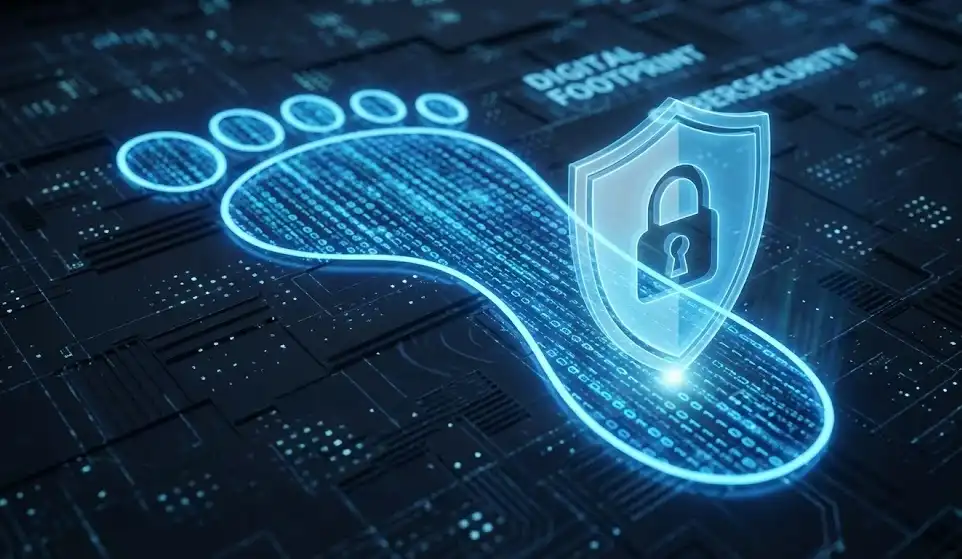
Every time a student logs into an educational app, submits an assignment online, or interacts on social media, they leave a digital trace. This "digital footprint" is permanent. In vocational training, where professionalism is paramount, understanding data privacy is crucial. A poorly managed digital footprint can affect future employment opportunities, as employers increasingly vet candidates' online behavior before hiring. Thus, learning to manage privacy settings and understanding the implications of data sharing is a fundamental skill for the modern era.
The Architecture of the Web: Surface, Deep, and Dark
To truly navigate the digital world, one must understand that the internet is composed of different layers, much like an ocean. Most users only ever see the surface, but the bulk of the data lies beneath.
-
The Surface Web: This is the part of the internet we use every day—news sites, social media, and university portals. It accounts for only a small fraction of the total web.
-
The Deep Web: This layer consists of databases, academic journals, and private records not indexed by search engines. It is the engine room of the internet.
-
The Dark Web: Perhaps the most misunderstood layer. While often associated with illicit activities, understanding its existence is vital for cybersecurity students and sociology researchers alike. It represents the unregulated wild west of the digital age.
Comprehensive educational reports and analyses on hidden web mechanics are essential reading for any student wishing to understand the full spectrum of cyber risks. By studying how these hidden networks operate, students can better appreciate the importance of encryption, anonymity, and the ethical debates surrounding digital freedom.
The Psychology of Investigation: Why We Are Drawn to Mysteries
Why are true crime podcasts and mystery documentaries so popular among students? The answer lies in "Critical Thinking." The human brain is wired to solve puzzles. When a student analyzes a cold case or a strange historical event, they are engaging in a high-level cognitive process called "abductive reasoning." They gather incomplete data and try to find the most likely explanation. This is the same skill set required in fields ranging from diagnostics to engineering.
Verification Skills in the Age of Misinformation
With the rise of AI-generated content and fake news, the ability to verify sources is a survival skill. Whether it's a rumor about a local event or a global conspiracy theory, students must learn to cross-reference information. Tools for verification include reverse image searching, checking domain authority, and looking for primary sources rather than relying on secondary reports.
The Rise of OSINT: Research as a Modern Superpower
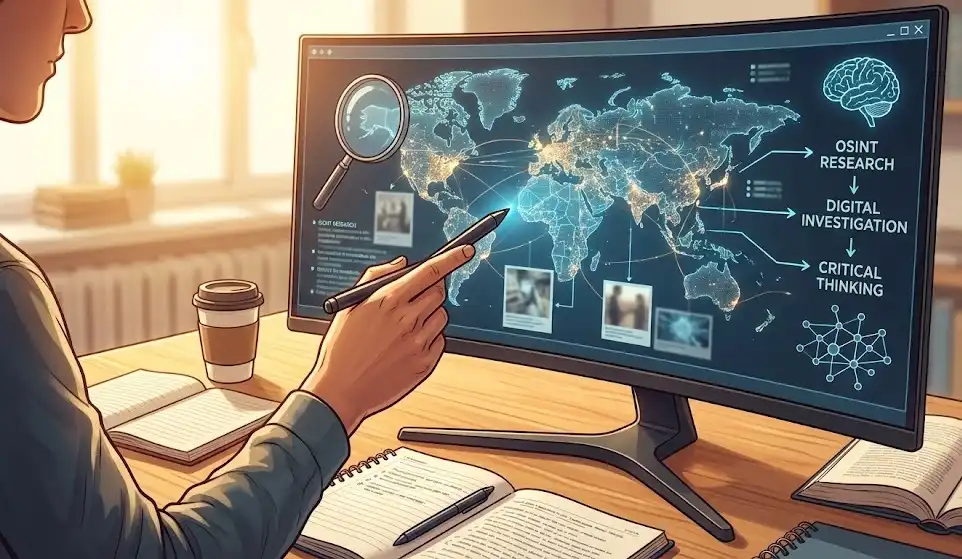
One of the most valuable skills a student can acquire today is known as OSINT (Open Source Intelligence). Originally a term used by intelligence agencies, OSINT refers to the practice of collecting and analyzing information from publicly available sources.
Why is this relevant to education? Because it teaches "Active Research." Instead of passively consuming information, students learn to actively hunt for the truth. For example, when analyzing a historical mystery or a complex news story, an OSINT-minded student will:
-
Cross-reference geolocation: Using satellite maps to verify if a video was truly filmed where it claims to be.
-
Analyze timestamps: Understanding the chronology of events to spot inconsistencies in a narrative.
-
Trace digital breadcrumbs: Finding the original source of a viral image to understand its context.
This investigative approach turns learning into an engaging puzzle. It transforms a boring history or sociology assignment into a detective case. When students apply these techniques to unsolved mysteries or "cold cases," they are essentially practicing the same analytical skills used by top-tier researchers and data analysts. This gamification of learning—turning research into an investigation—has proven to significantly increase student retention and engagement rates.
Global Perspectives on Unresolved Phenomena
Digital literacy also means exploring content beyond one's language barrier. The internet connects us to global narratives. Different cultures approach mysteries and storytelling in unique ways. For example, in the Middle East, there is a growing community of researchers dedicating their time to documenting and analyzing unexplainable events, criminal psychology, and historical anomalies. Understanding these diverse perspectives enriches a student's worldview and fosters cultural competence.
Conclusion: Empowering the Next Generation
The goal of modern education is to create well-rounded individuals who are not only skilled in their trade but are also savvy digital citizens. By integrating topics like cybersecurity, critical thinking, and investigative analysis into their learning path, we prepare students for a complex world.
For those who wish to delve deeper into these analytical topics, exploring specialized platforms is highly recommended. Websites like Razgosha offer a unique window into these worlds, providing Persian-speaking enthusiasts with in-depth articles, case studies, and investigative reports that challenge the mind and expand one's horizon.


 icons at the top
right corner of the subsection.
icons at the top
right corner of the subsection.